Immigration was the defining issue of 2024 — 82% of Republican voters called it very important to their vote.
But after a promising start in January 2025, Congressional leadership is running out of time to deliver.
It wouldn’t be the first time.
Here’s Where We Stand Today
44 House Republicans with at least an A−
34 in the C+ to D range
Most House Republicans are in the B+ to B− range.
The 2005 House – like the 2025 version – started strong. Speaker Dennis Hastert brought a serious enforcement bill to the floor even though he personally lacked enthusiasm for it. He honored the voters, and the bill passed.
The Senate never followed through. The Judiciary Chairman did nothing, and GOP leadership did nothing.
Instead, Senate Republicans pivoted toward amnesty and immigration expansion the following spring.
In 2010, amid national backlash over illegal immigration and rising support for state enforcement efforts, Republicans retook the House.
The result? Nothing.
In 2014, voters again handed Republicans the House after backlash against DACA and the worsening border crisis.
Rep. Lamar Smith and the House Judiciary Committee got to work.
On March 3, 2015, the committee approved the Legal Workforce Act, which would mandate E-Verify for all new hires.
And then leadership killed it.
Speaker Boehner and his team blocked the bill for two years despite strong support from Republican voters and broad business backing.
In 2016, Donald Trump won the presidency by openly attacking the GOP establishment’s failures on immigration. Republicans also secured House and Senate majorities.
Rep. Bob Goodlatte responded with a serious reform package modeled on the successful 2005 House bill. He expanded it further by proposing an end to the “chain migration” extended-family categories.
Leadership blocked that effort too.
Speaker Ryan sabotaged it in the House. Majority leader McConnell sidelined it in the Senate.
Trump’s first term produced short-term executive actions, but Congress failed to follow through with lasting reform.
Now Republicans risk repeating the pattern again.
Leadership opened this Congress with the Laken Riley Act — a meaningful first step.
“This bill is a small but critical step to resolving the Biden border crisis,” Majority Leader Thune said at the time. “The first of many.”
But there has been no second act.
Yes, Congress funded the administration’s enforcement operations. But with Republican control of both chambers and the White House, the border legislation they once championed has quietly disappeared from the agenda.
Last Congress, Speaker Johnson repeatedly declared the Secure the Border Act the only acceptable border legislation. Sen. Thune cosponsored the Senate companion bill.

Now, with Republican control of Congress and the White House, permanently securing the border is no longer even on the agenda.
The majority is thin. The opposition is real (only four House Democrats have earned better than an F). Those are realities – not excuses.
This is the moment to fight.
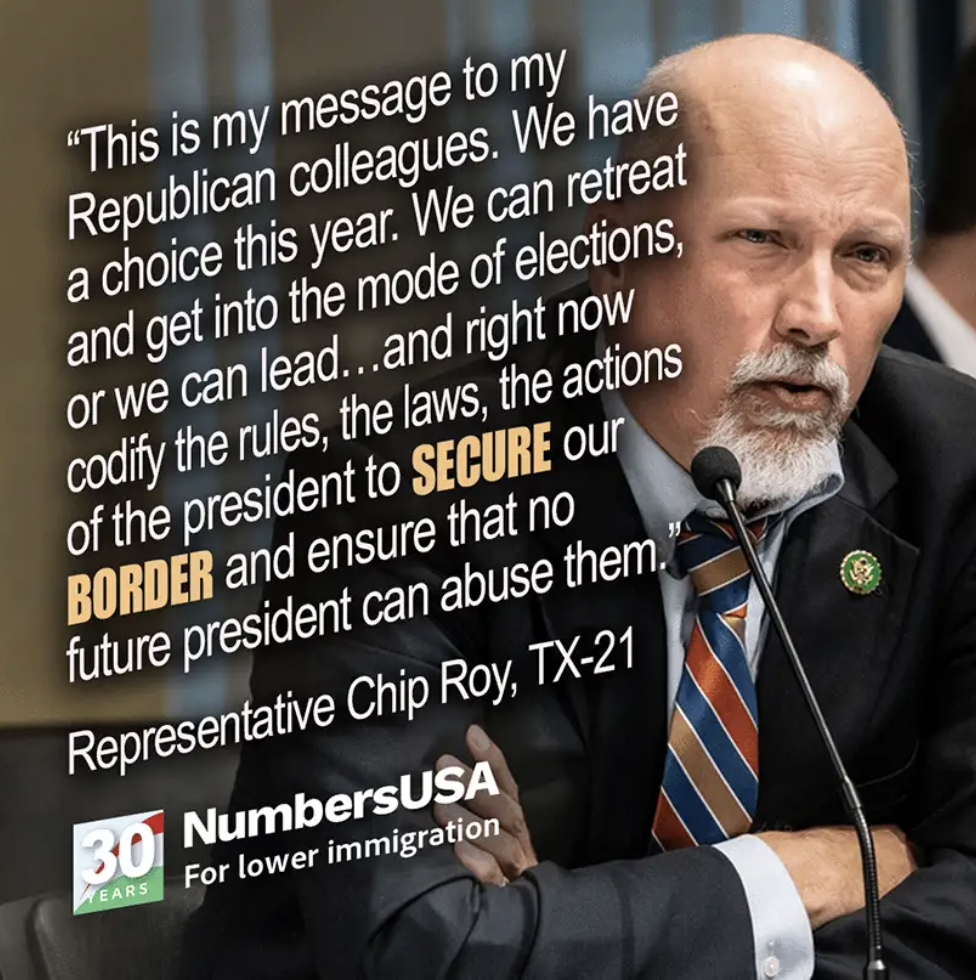
Let the House vote.
Not just on incremental enforcement measures, but on real reforms.
Tom McClintock’s Shut Down Sanctuary Policies Act (H.R. 7640) has already advanced out of committee. It’s an obvious place to start.
But leadership should go bigger and force public votes on the policies voters want:
Immigration voters are right to ask:
If not now, when?
Related Resources


 Facebook
 LinkedIn
 Tweet
Tweet
 Email
Email
 Print
Print
 Videos

 Factsheets
 Articles