As more people move into the Chesapeake Bay region, development has turned forests, farms and other landscapes into subdivisions, shopping centers and parking lots.
— Chesapeake Bay Program
Our analysis of the most recent federal data finds that most of this rural land conversion was caused by rapid population growth — a nearly six million increase during the study period — and most population growth was driven by immigration into the region.
— Watershed Woes: Population Growth and Sprawl Degrade Chesapeake Bay and its Watershed
Last month NumbersUSA released a new study titled Watershed Woes: Population Growth and Sprawl Degrade Chesapeake Bay and its Watershed. This blog post explores the main stress factors behind the bay’s long-term decline, as identified by the government-funded, multi-jurisdiction Chesapeake Bay Program.
Bear in mind that each of these drivers of decline is exacerbated by population growth in the bay’s watershed, and that almost all current and future population growth is now caused by immigration, not high birth rates among Americans. The Baby Boom ended more than half a century ago! Meanwhile, immigration numbers have skyrocketed — from 300,000 in 1965 to 3 million in 2024.
Watershed Woes
Agricultural Runoff — Agriculture in the watershed is the bay’s largest source of nitrogen pollution, which causes algal blooms, depletion of dissolved oxygen, dead zones and fish die-offs. Agriculture grows crops that feed people and the animals that people eat, and fertilizers such as nitrogen and phosphorus nourish the crops that make this possible.
A larger population demands more food, needs more agriculture to produce that food, and entails more nitrogen pollution in the process. The Stockholm Resilience Centre in Sweden lists biogeochemical flows of nutrients such as nitrogen and phosphorus as one of the nine “planetary boundaries” for ecological health that have been breached by excessive human numbers and economic activity.
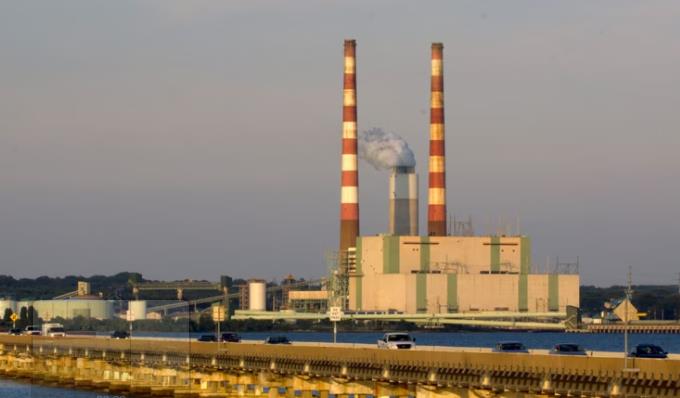
Air Pollution — Air pollutants emitted from sources such as vehicle tailpipes and power plant smokestacks not only foul our air, but return to the Earth’s surface via raindrops and snowflakes, where they can end up in Chesapeake Bay.
The bay’s “airshed” — the area of land from which airborne pollutants can enter it — extends across an estimated 570,000 square miles, nine times the 64,000-square mile bay watershed proper. A larger population of people and their vehicles, homes, offices and data centers means more pollutants raining down into the bay.
Air pollutants from fossil-fuel power plants harm not just air quality, but water quality as well
Chemical Contaminants — An estimated 78% of the bay’s waters are partially or entirely impaired by a witch’s brew of contaminants. These include pesticides, pharmaceuticals, heavy metals and other toxic chemicals. When ingested or absorbed, these toxins harm the health of wildlife and humans. A larger population = more contaminants.
Climate Change and Ocean Acidification — Both in the United States and globally, human population growth mean more energy use and greenhouse gas emissions. Symptoms of a warming climate are already being observed in the bay and watershed. These include sea level rise, increased coastal flooding and shoreline erosion, warming water temperatures, changes in wildlife distributions and migration patterns, and prolonged periods of extreme weather.
As the concentration of carbon dioxide in the atmosphere increases, so does the amount of CO2 absorbed by ocean water, increasing acidity (reducing pH). Greater acidity makes it harder for oysters and other shellfish to produce the calcium carbonate from which their shells are made. Fewer oysters and their reefs would be a terrible outcome in and of itself, but will also adversely affect water quality and fish and wildlife habitat.
Dead Zones — A “dead zone” is a volume of water containing little or no dissolved oxygen. Aquatic vertebrates and invertebrates need sufficient oxygen to survive, just as terrestrial organisms do. In the bay, dead zones are usually caused by excessive nutrients (primarily nitrogen and phosphorus) draining from the watershed, triggering algal blooms, which deplete oxygen when they die and decompose.
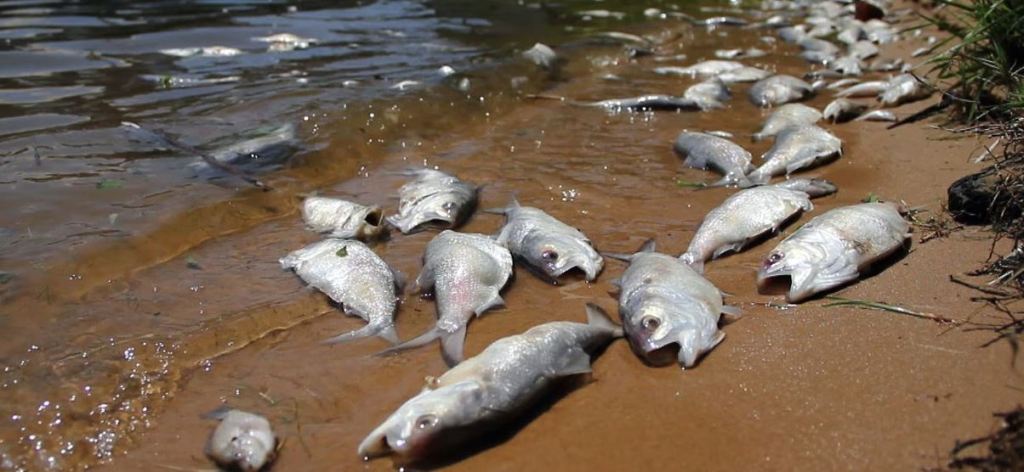
Incidents known as “fish kills” occur when dead fish wash up on shore. In the bay and the lower reaches of its tributaries, these fish kills are often caused by suffocation within dead zones.
Fish kill in Anne Arundel County, Maryland
Development, Sprawl and Population Growth
All threats to Chesapeake Bay and its watershed, from agricultural runoff to forest loss, from chemical contaminants to dead zones, are exacerbated by continued population growth in the watershed and its accompanying development. This is self-evident. Yet government agencies and most of the bay’s environmental defenders continue to dismiss or deny it.
For example, the Chesapeake Bay Program, funded with taxpayer dollars, asserts:
“Population growth and development do not inherently harm the Chesapeake Bay. But the way we develop the land — including where we put new roads and buildings and how we build them — can have a lasting impact on the environment.”
In essence, the Program is promoting growth management or “smart growth” as sufficient to mitigate any amount of population growth, in perpetuity. The late physicist and conservationist Albert Bartlett denounced such “pseudo-solutions,” writing:
“Sometimes these planning processes are advocated by those who believe that we can’t stop population growth; therefore we must accommodate it as best we can. Other times they are advocated by those who are actively advancing population growth. The claim is made that growth management and smart growth ‘”‘will save the environment.'”‘ They don’t save the environment. Whether the growth is smart or dumb, the growth destroys the environment.”
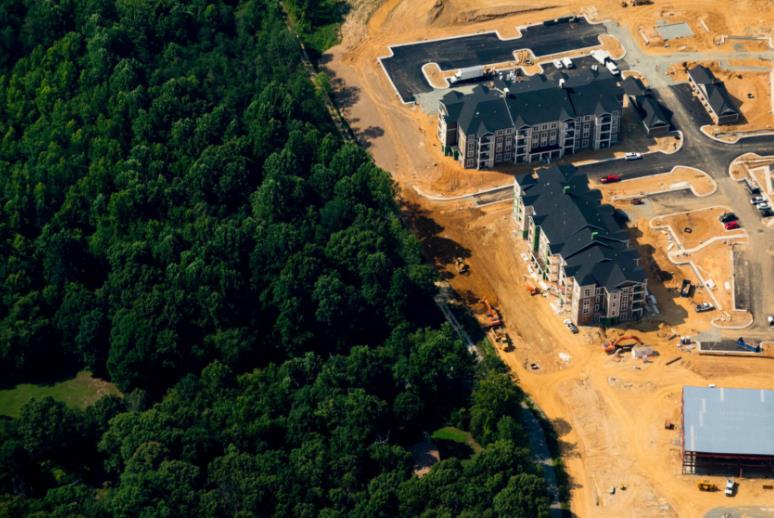
Higher density development, like that shown in the photo below, can sometimes use land more efficiently and slow the rate of sprawl and habitat loss, but not halt it. And if it is used as an excuse for continued growth, it’s just makes the situation worse.
A parcel of open space that will be developed within five years under business-as-usual will be developed within ten years using smart growth strategies — with even more people demanding necessary ecological services. Is this truly progress?
High-density development in Stafford County, Virginia, from the Chesapeake Bay Program
Additional Stressors
Invasive species — Invasive species are organisms that cause ecological or economic harm in a new environment where they are not native. Aided by the post-World War II explosion in population, global trade and mobility, invasive species — adept at “hitching rides” to favorable new environments — have become a major problem for ecosystems and economies around the world.
The Chesapeake Bay Program reports that at least 200 invasive species have been documented in the Chesapeake Bay watershed. They include blue and flathead catfish, mute swans, nutria, zebra mussel, the emerald ash borer, phragmites, purple loosestrife and water chestnut.
Sediment and Stormwater Runoff — Sediment is comprised of particles of clay, silt and sand transported by moving water. Suspended sediment can cloud the waters of the bay and its tributaries. This increased turbidity prevents sunlight from reaching underwater grasses, which need that solar energy for photosynthesis. It also reduces water clarity and quality for fish and other aquatic species.
When they settle out, sediments smother bottom habitats like oyster beds. An average 5.2 million tons of sediment are deposited in Chesapeake Bay annually. Watershed erosion increases when protective vegetation is stripped away for agriculture and development, exposing bare ground. The more people, the more erosion.
Stormwater runoff happens when rain falls on impervious surfaces such as streets, parking lots, and highways, or porous surfaces such as golf courses and lawns. It washes off harmful pollutants such as fertilizers, pesticides, pet waste, leaked oil and other chemical toxins into the nearest gutter, storm drain, or watercourse. Ultimately, these pollutants wind up in Chesapeake Bay.
Wastewater — This refers to liquid or slurried waste and sewage generated by residences, businesses, schools and factories. It is typically collected by sewage systems and treated in a wastewater treatment plant. At the watershed’s 472 municipal and industrial treatment plants, wastewater is treated to reduce (but not eliminate) pollutants and other harmful substances, down to levels regarded as safe. Because no wastewater purification system is 100% effective, more people inevitably means more water pollution.
The Bottom Line
The drivers discussed above are just the proximate causes of the Chesapeake Bay’s ecological decline. The fundamental underlying cause, now and for the foreseeable future, is immigration-driven population growth in its watershed. Ending the region’s population growth is essential to preserving the bay. That means the bay’s future will be decided on Capitol Hill and at the White House, just as much as on the banks of its streams and tributaries.
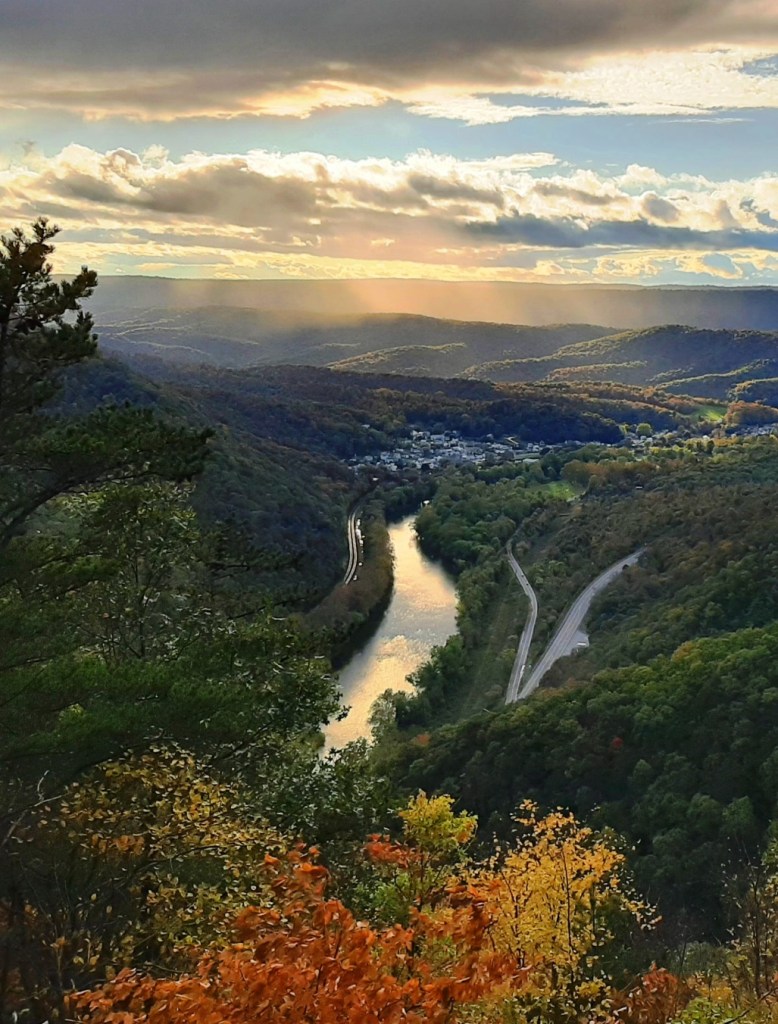
Juniata River in Pennsylvania, a tributary of the Susquehanna River, main source of freshwater for the Chesapeake Bay
 Videos
 November 3, 2023


 Facebook
 LinkedIn
 Tweet
Tweet
 Email
Email
 Print
Print
 Factsheets
 Articles