For decades after the Clean Air Act (1970), new emission standards, cleaner fuels and technological innovations brought steady air quality improvements to America’s metro regions. But those gains have since stalled and, in recent years, ozone and particulate pollution have worsened in many regions.
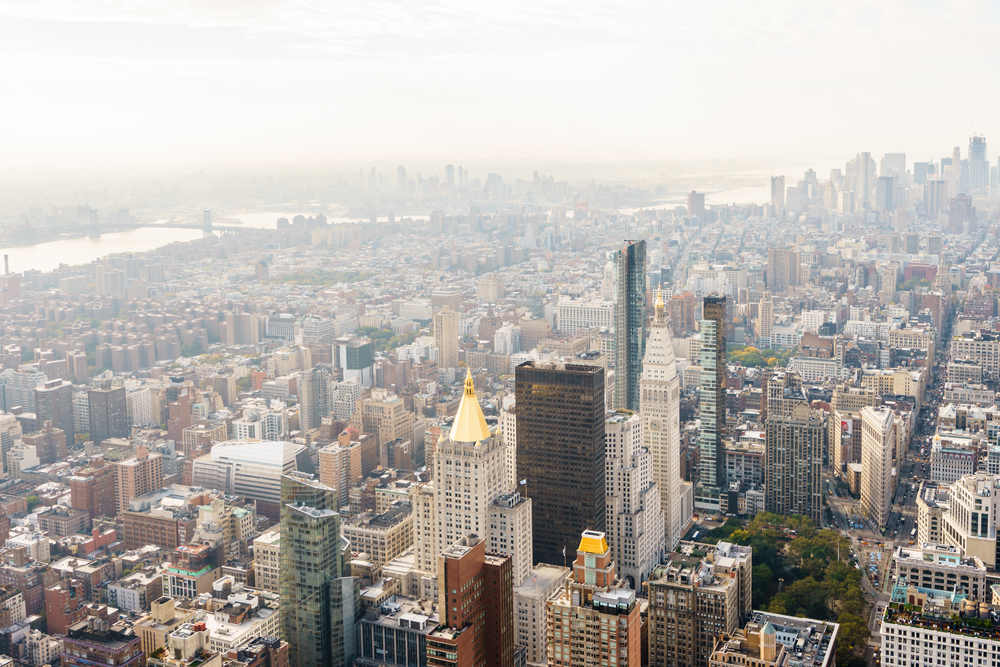
Air Pollution in New York City
Population growth, with its traffic expansion and rising energy demands, is overwhelming the benefits of air pollution controls. Now that the most effective and affordable mitigation measures have been implemented, what remains are increasingly expensive options with increasingly smaller benefits.
The transportation sector provides a case in point. Vehicles today emit far less pollution per mile than they did a generation ago. However, total vehicle miles traveled have jumped 22% since 2000, driven largely by population growth and urban sprawl. In fast-growing metropolitan areas such as Phoenix, Atlanta and Dallas–Fort Worth, rising traffic volumes have led to persistent or worsening ozone smog, even as per-vehicle emissions have declined. To maintain today’s air quality would require additional reductions in individual tailpipe emissions — at a substantial cost. All the while, America’s expanding number of vehicles is adding new pollution sources.
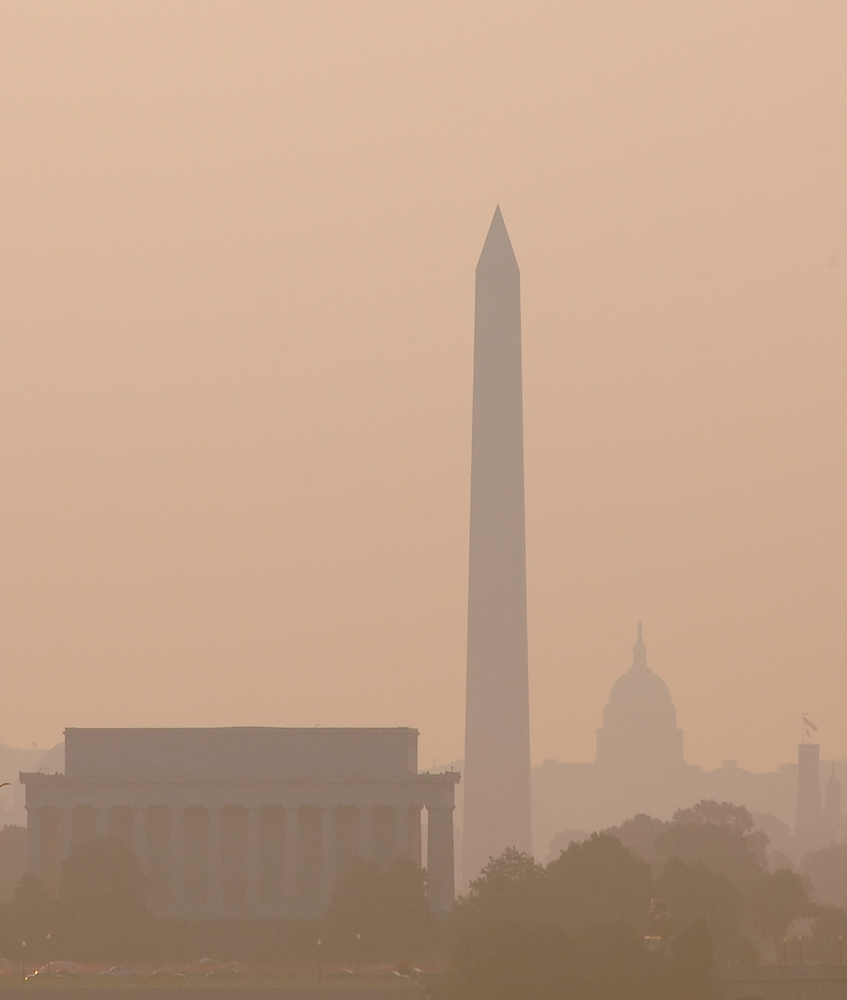
Air Pollution in Washington, DC
Population growth also amplifies construction, freight movement and land conversion, all of which contribute to particulate pollution. Rapid growth and overdevelopment in states such as Texas, Arizona, Georgia, North Carolina, Nevada and Colorado have increased diesel exhaust, construction dust and industrial emissions. These activities are significant sources of PM2.5 and PM10 particulates. In basin regions — such as Salt Lake City, Boise, Denver and parts of California’s Central Valley — temperature inversions frequently trap these emissions near the surface, producing recurrent pollution episodes.
Rising populations also increase electricity demand, placing additional pressure on air quality. Residential growth, warehouse and freight centers, and energy-intensive data centers have substantially increased electricity consumption in rapidly growing states. Even where renewable energy sources have been developed, growing demand is overwhelming supplies, requiring continued reliance on fossil fuels.
In 2000, the U.S. population stood at 282 million, including about 31 million foreign-born residents. Today, our population has grown to 344 million — an additional 62 million people — with an estimated 53 million foreign-born. The Census Bureau predicts that at current immigration rates, this trajectory will continue, with the U.S. population reaching nearly 500 million by 2100 — with all of that growth driven by immigration. Growth on this scale will cause air quality to further deteriorate.
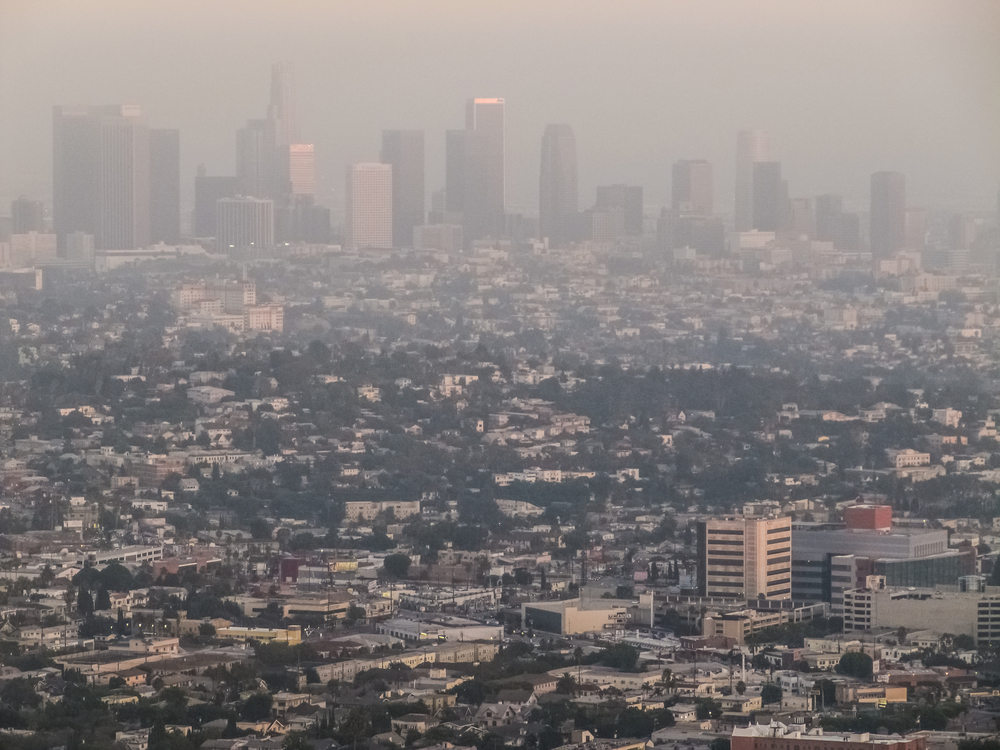
Air Pollution in Los Angeles
Recurrent episodes of poor air quality are associated with increases in respiratory illness and premature death. Exposure to fine particulate matter (PM2.5) and ground-level ozone worsens asthma, aggravates lung disease and increases serious heart problems. Studies estimate that long-term PM2.5 exposure contributes to 100,000–200,000 premature deaths each year in the United States.
In metro areas nationwide, population numbers drive the intensity of air pollution. Each new resident magnifies air emissions by increasing demand for transportation, housing and energy. As regulators try to extract ever-smaller gains from increasingly costly air pollution controls, mitigation measures are no longer keeping pace.
Americans need to acknowledge that pollution controls are subject to the Law of Diminishing Returns. To achieve acceptable air quality in all our communities, we must reduce excessive immigration rates and stabilize our population. If population growth continues, Americans will lose the battle for clean air.
Related Resources


 Facebook
 LinkedIn
 Tweet
Tweet
 Email
Email
 Print
Print
 Videos

 Factsheets
 Articles